


Diamine oxidase, also known as histaminase, is an enzyme (EC 1.4.3.22) involved in the metabolism, oxidation and inactivation of histamine in animals. The highest content is observed in the digestive tract and placenta. It is also secreted by eosinophils.
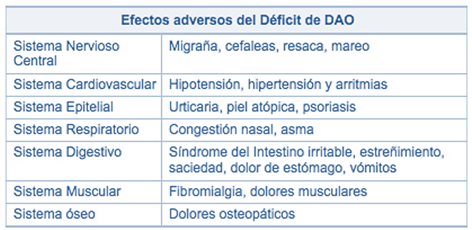
In childhood and adolescence, DAO deficiency has been linked to attention deficit hyperactivity disorder (ADHD).
Histamine (HA) belongs to the group of biogenic amines, which are low molecular weight nitrogenous compounds formed by the decarboxylation of amino acids. Histamine is released when the allergic reaction is triggered and causes inflammation. It is the cause of many allergy symptoms, such as the hives, redness and itching seen in urticaria or the nasal congestion, nasal itching and sneezing seen in allergic rhinitis.
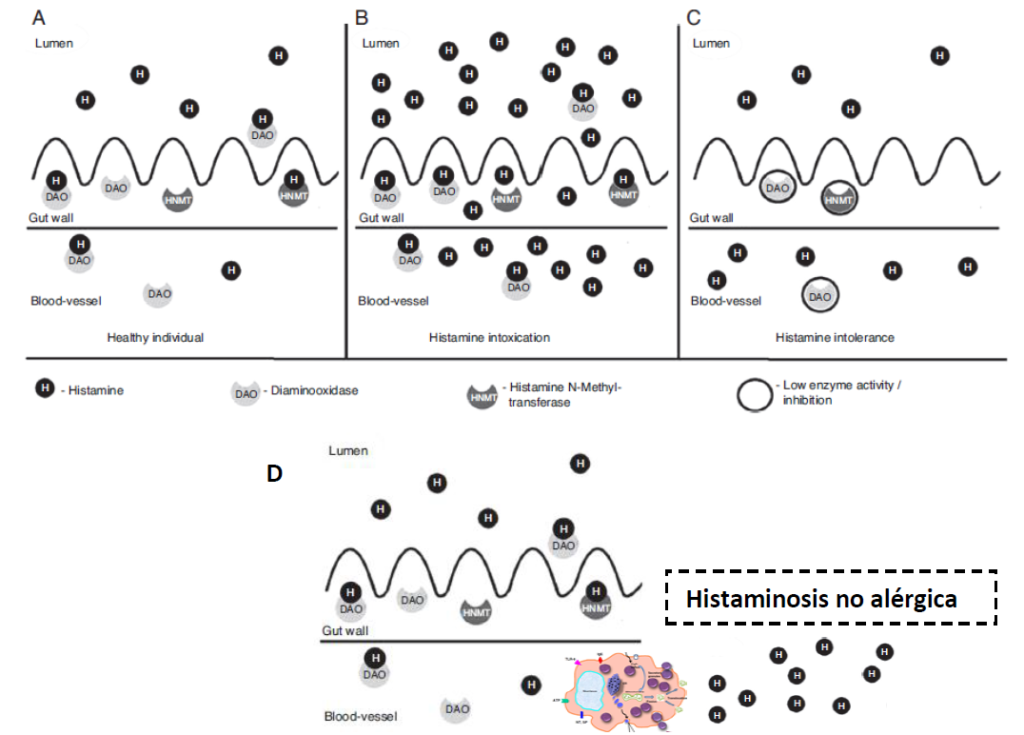
Histamine can also be found in many foods in high quantities and its excess in the body, in people with or without problems in its metabolism (enzymatic deficit in many cases) is associated with migraines. This produces what is called histamine intolerance or toxic histaminosis (image B and C).
In other situations, due to an immunological reaction to food, a histamine release is triggered, resulting in various adverse symptoms such as diarrhea, urticaria and others. In this case it would be a non-allergic food histaminosis (HANA) (image D).
Histamine has also been associated with CNS diseases.
Histamine determination is performed by high performance liquid chromatography (HPLC), a reference technique, with post-column derivatization (OPA) and fluorimetric detection, ensuring ultra-sensitivity and high specificity to the analytical system. Our ultra-sensitive HPLC system achieves a histamine detection rate of 5 pg or 1×10⁷ ppm.
The radioimmunoassay technique is used to determine the activity (not concentration!) of the DAO enzyme.